Ask five solar vendors how big a system your house needs and you may hear five different numbers — usually whichever number matches the stock that vendor wants to move that week. Sizing is where most solar buyers in Pakistan go wrong, and it is the one mistake that cannot be fixed cheaply afterwards. An undersized array leaves you paying heavy bills anyway; an oversized one ties up capital producing power you cannot use.
The good news: sizing is not guesswork. It comes down to a handful of numbers you already possess — the units printed on your electricity bill, the free space on your roof, and an honest accounting of the appliances you actually run. Work through the steps below and you will walk into any showroom already knowing the answer before anyone opens a brochure.
“How Many Panels?” Is the Wrong First Question
Panels come in wildly different wattages, so counting them tells you almost nothing. A 585-watt module and a 400-watt module look similar on a roof but behave very differently on a meter. The figure that matters is total system capacity in kilowatts, and behind it, the kilowatt-hours — the “units” on your bill — that this capacity will produce each day. Frame every conversation as units generated versus units consumed and the fog lifts immediately. Vendors who keep steering you back to panel counts, rather than expected monthly generation, are selling hardware rather than a solution.
Find Your Real Consumption First
Gather twelve months of bills, or pull the history from your distribution company’s app, and write down the units for each month. Two figures matter: the annual average and the summer peak. A household might average 550 units across the year yet touch 950 in July when the air conditioners run through the night. That spread — not either number alone — determines how your system should be shaped.
If you have only lived in the house a short while, do not extrapolate from a mild spring month. Estimate the summer load honestly, because June and July are exactly when you will lean on the system hardest.
A Sizing Formula You Can Do on Paper
Across most Pakistani cities, a well-installed system yields roughly four units per kilowatt per day averaged over the year — more in May’s blazing sun, less under December fog. Divide your daily consumption by four and you have a credible starting size. A home burning 600 units a month uses about 20 units a day, so a 5 kW system covers the average while something closer to 7.5 kW covers the summer peak.
Which target you choose depends on net metering. With an export connection approved, surplus winter generation earns credits that offset summer shortfalls, so sizing between the average and the peak usually makes financial sense. Without export, size conservatively toward daytime self-consumption.
Typical Sizes by Home, From 5 Marla to a Kanal
Real houses cluster predictably. A 5-marla home with lights, fans, a refrigerator and one inverter AC typically settles between 3 and 5 kW. A 10-marla household running two or three air conditioners generally needs 6 to 8 kW, and full kanal residences with multiple cooling zones, water pumps and outdoor lighting frequently justify 10 to 15 kW. Families comparing solar panels in Islamabad for a mid-sized house will find most professional load assessments landing inside these bands.
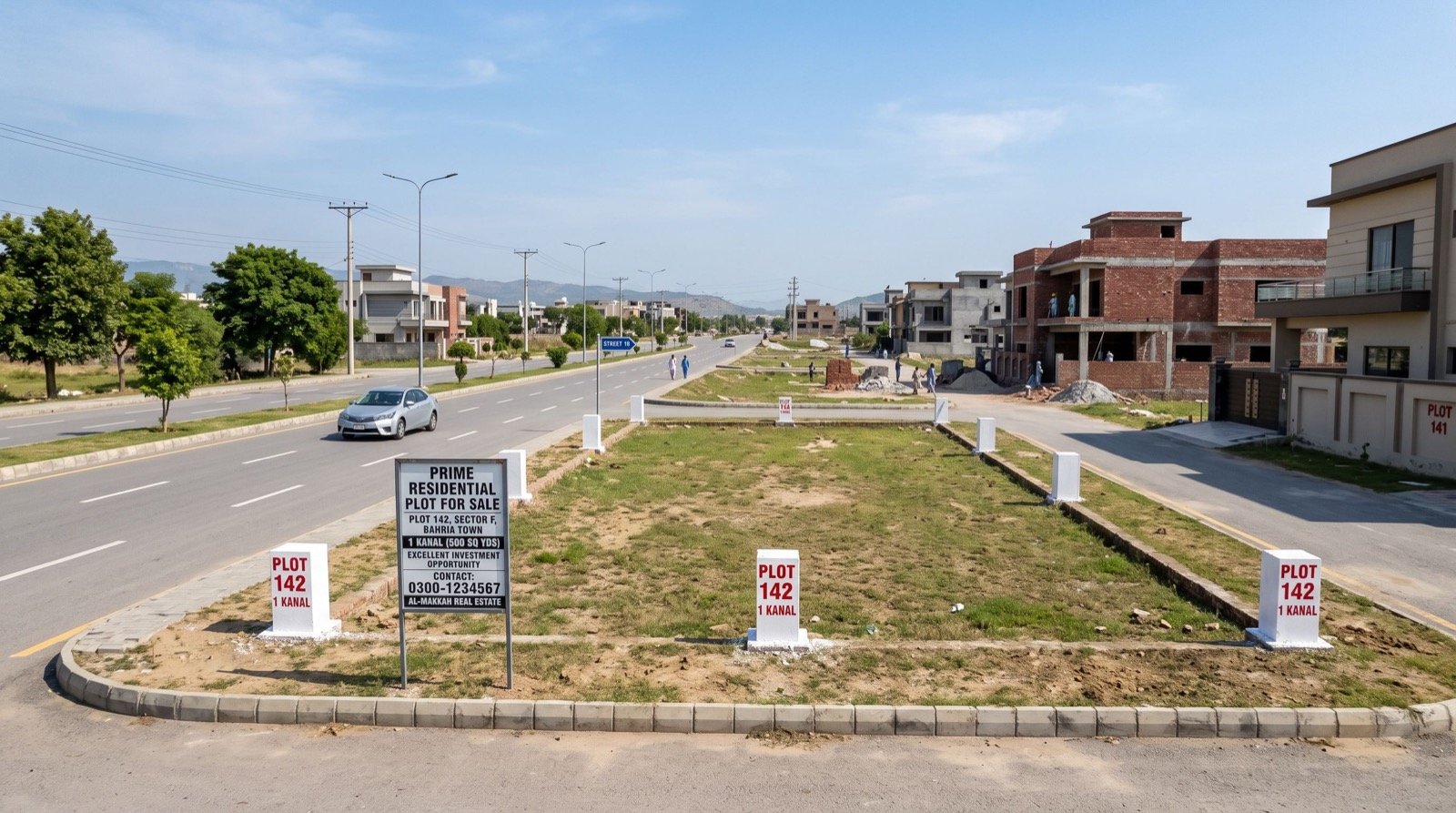
Interestingly, the same instinct now shapes property decisions themselves. Analyses of why certain housing societies are outperforming the market note that buyers increasingly favour projects backed by reliable local experts — and several newer developments actively market solar-ready rooftops and net-metering support as selling points.
Air Conditioning Changes Everything
No appliance distorts a sizing exercise like cooling. A single 1.5-ton inverter AC can draw 1.2 to 1.8 kW for hours at a stretch, and most households run more than one through the summer. If your plan involves daytime cooling on solar power, each AC effectively claims a slice of your array’s capacity before anything else gets a share.
List your air conditioners, their tonnage and the hours they realistically run. Then decide which of them the system must carry at midday. That single decision moves more kilowatts on or off your quotation than any other choice you will make.
Roof Space, Orientation and the Shade Test
Modern high-wattage panels need roughly 55 to 70 square feet per kilowatt once walkways and spacing are accounted for, so a 10 kW ambition demands around 600 to 700 usable square feet. South-facing placement harvests the most energy in Pakistan’s latitude; east–west splits sacrifice a little total yield but spread generation across the day, which suits homes without export connections.
Run a simple shade test before committing: photograph the roof at 9 a.m., noon and 3 p.m. Water tanks, parapet walls, mumty rooms and a neighbour’s overhead cables all cast shadows that can cripple a string of panels. Whatever area fails the test should be subtracted from your usable space, not argued with.
Grid-Tied, Hybrid or Off-Grid: Storage Changes the Sums
A grid-tied system is sized purely against consumption and export potential. Add batteries and a second calculation appears: night-time load. Storage should be sized to the essentials you want running after sunset — fans, lights, a refrigerator, perhaps one AC — not to your whole daytime demand, because every additional kilowatt-hour of lithium is expensive. Installers serving industrial-belt cities report the same pattern; firms fitting solar panels in Faisalabad increasingly recommend hybrid inverters with modest battery banks that carry the evening, then recharge from surplus sun the next morning.
Whichever architecture you choose, ask the installer to show the sizing logic in writing — daily generation, daytime consumption, night reserve and export margin, line by line.
Key Takeaways
- Size in kilowatts and daily units, never in panel counts.
- Twelve months of bills — the average and the summer peak — are the foundation of every honest sizing exercise.
- Divide daily units by four to estimate the kilowatts you need in most Pakistani cities.
- Expect roughly 3–5 kW for a 5-marla home, 6–8 kW for 10 marla and 10–15 kW for a kanal residence.
- Decide which air conditioners the system must run at midday before you accept any quotation.
- Batteries are sized to night-time essentials, not total consumption — keep storage modest and purposeful.
Conclusion
System sizing is the quiet foundation beneath every successful solar installation. Get it right and the array hums along for decades, shaving the bill exactly as promised; get it wrong and no premium panel or celebrated inverter brand can compensate. The arithmetic in this guide takes an evening with your old bills and a measuring tape — a trivial effort against a purchase that will sit on your roof for twenty-five years.
Do the numbers yourself first, then invite vendors to challenge them. The ones who engage with your calculation, correct it where your assumptions slip and document their own logic are the ones worth shortlisting. In solar, as in most things, the buyer who arrives with a number is the buyer who gets a fair one.