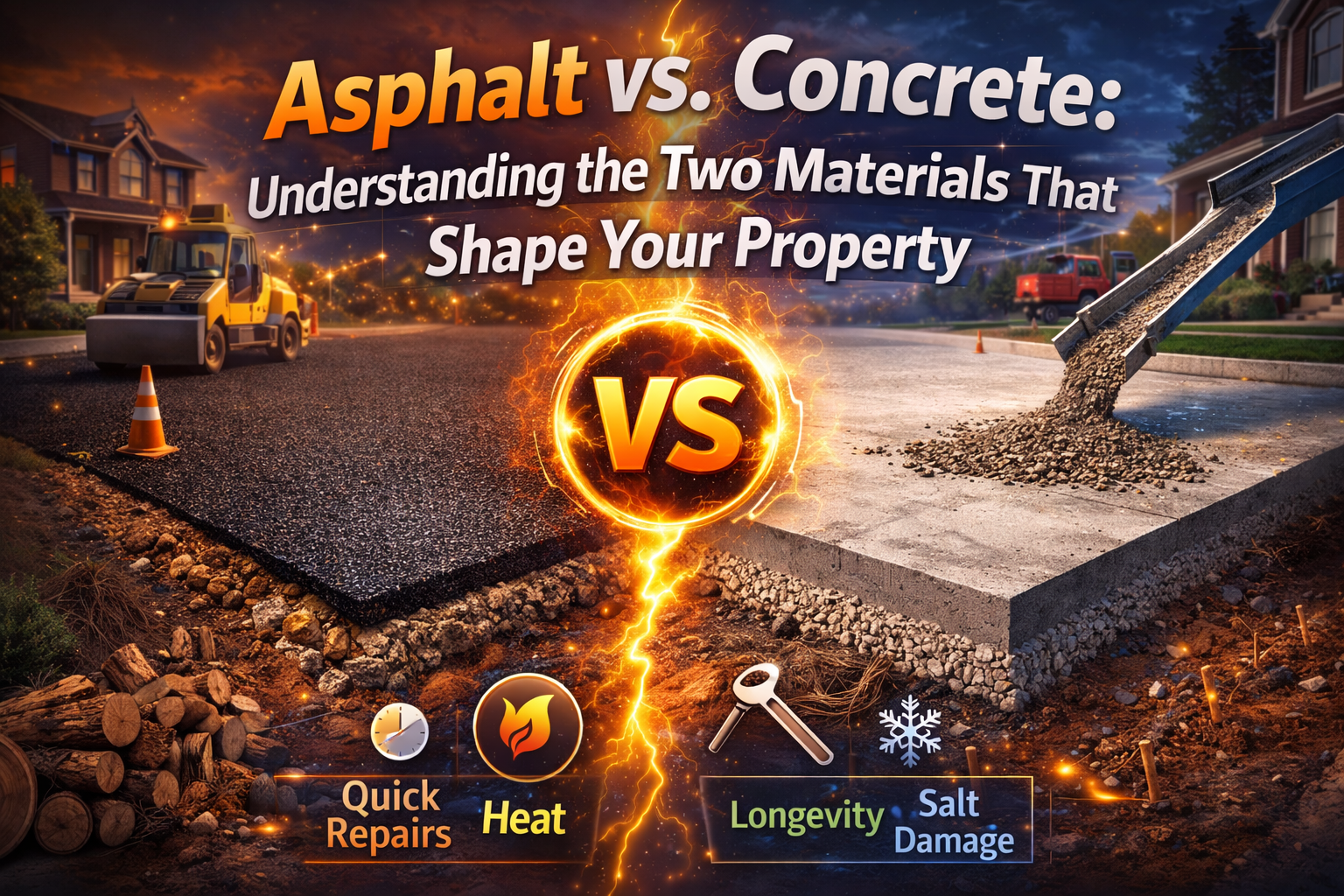
Walk through any neighborhood in the Lehigh Valley and you’ll notice something: every driveway, every parking lot, every walkway is built from one of two materials. Asphalt or concrete. They look different, feel different underfoot, and behave very differently over the years yet most property owners never really think about what’s under their tires until something starts to crack, sink, or fade.
If you’re planning a new driveway, refreshing a commercial lot, or just curious about what’s actually beneath your wheels every day, this guide walks you through how these two materials work, where each one shines, and what you should know before breaking ground on any paving project.
What Asphalt Actually Is
Asphalt sometimes called blacktop is a mix of stone, sand, and a petroleum-based binder that holds everything together. The binder is heated until it’s pliable, mixed with aggregates, rolled onto a prepared base, and compacted while it’s still warm. Once it cools, you get that familiar smooth, dark surface you see on roads and driveways everywhere.
One of asphalt’s biggest strengths is flexibility. Because the binder stays slightly pliable, the surface can absorb small ground movements without cracking apart. That’s a major advantage in regions with harsh freeze-thaw cycles which is exactly what Allentown and the surrounding Lehigh Valley deal with every winter. When the ground shifts as it freezes and thaws, asphalt tends to move with it rather than fight it.
Another perk: asphalt is usable fast. In most cases, you can drive on a freshly installed asphalt surface within a day or two. For homeowners who can’t afford to be without their driveway for a week, that’s a real benefit.
What Concrete Brings to the Table
Concrete is a completely different animal. It’s made from cement, water, sand, and gravel, poured into forms, leveled, and then left to cure. That curing process takes longer typically several days before light use and up to a week before heavy vehicles can roll on it but the payoff is a rock-hard surface that can last decades.
Concrete’s biggest advantage is raw strength. It handles heavy loads exceptionally well, which is why you see it under industrial loading zones, commercial entrances, and anywhere trucks are constantly coming and going. It also stays noticeably cooler underfoot on hot days, which matters more than people realize for patios, pool decks, and walkways.
Then there’s the design side. Concrete can be stamped, stained, tinted, textured, or brushed into an almost endless range of finishes. If you want your driveway or walkway to match a specific aesthetic brick patterns, slate looks, custom colors concrete gives you options asphalt simply can’t match.
How Climate Shapes the Right Choice
Climate is probably the single most important factor when choosing between these two materials, and it’s one a lot of property owners overlook. Asphalt’s flexibility makes it well-suited to cold climates because it handles freeze-thaw cycles without cracking the way rigid surfaces do. Concrete, on the other hand, performs best in hot, stable climates where it doesn’t have to deal with repeated expansion and contraction.
This is where local experience really matters. A paving crew that understands Pennsylvania winters knows how to prep the base, what thickness to pour, and how to account for drainage so water doesn’t sit and refreeze under the surface. If you’re weighing your options for a project in the area, it’s worth taking a minute to Contact Conte Paving & Construction Allentown and ask how each material would perform on your specific site soil conditions, slope, and sun exposure all play a role that generic advice can’t account for.
Maintenance: Two Very Different Routines
Both materials need care, but the routines look nothing alike.
Asphalt needs to be sealed. Usually, the first seal coat happens six to twelve months after installation, and then every three to five years after that. Sealing protects the binder from UV rays, oxidation, and moisture all the things that turn a smooth black surface into a brittle, gray, cracking mess over time. The upside is that asphalt repairs are easy and blend in well. Cracks can be filled, surfaces can be resurfaced, and the new work disappears into the old.
Concrete doesn’t require sealing the same way asphalt does, though sealing is recommended every few years to protect against stains and weathering. The tradeoff: when concrete does crack or get damaged, repairs are much more visible. Patches rarely blend in perfectly, and resurfacing isn’t really an option the way it is with asphalt. Concrete also doesn’t love deicing salt it can pit and stain the surface, which is something to keep in mind during Pennsylvania winters.
Lifespan and Longevity
Here’s where people often get confused. Both materials last a long time if they’re installed properly and maintained. Asphalt driveways typically give you 20 to 30 years of service. Concrete can push 30 to 50 years or more. But those numbers assume two things: a properly prepared base, and consistent maintenance.
A cheap, rushed install on a poorly compacted base will fail in five years no matter which material you choose. This is why the prep work grading, compacting, installing a solid gravel base, ensuring proper drainage matters more than almost anything else. The surface you see is only as good as the foundation you don’t.
Appearance and Curb Appeal
Asphalt gives you a clean, streamlined, uniform look. It’s dark, it’s smooth, and it pairs well with just about any home style. If you want your driveway to disappear visually and let the house itself be the focal point, asphalt does that nicely.
Concrete takes a different approach. With staining, stamping, and decorative finishes, it can become a design feature in its own right mimicking brick, stone, or tile, or serving as a bold visual element that adds character to the property. For higher-end residential projects and commercial entrances where first impressions matter, that customization is hard to beat.
Which One Is “Better”?
Neither. That’s the honest answer, and anyone who tells you one material is universally superior is selling you something.
Asphalt wins on flexibility, cold-weather performance, fast installation, and easy repairs. Concrete wins on raw strength, design versatility, and long-term durability under the right conditions. The right choice depends on your climate, your property, how you’ll use the surface, how long you plan to own the home, and what look you’re going for.
What matters most is working with a paving contractor who’ll actually look at your site, listen to your goals, and recommend the material that fits rather than defaulting to whatever they happen to install most often. Good prep, honest communication, and experience with local conditions will always matter more than the material on the surface.
The Bottom Line
Whether you end up choosing asphalt or concrete, understanding how each one works puts you in a much better position to make a confident decision and ask the right questions before any work begins. Both materials have built the roads, driveways, and parking lots we rely on every day and both can serve your property beautifully for decades when they’re installed and maintained the right way.
The surface you walk and drive on every day deserves a little thought. Take the time to understand your options, ask questions, and partner with a team that knows your local conditions. Your future self and your driveway will thank you.