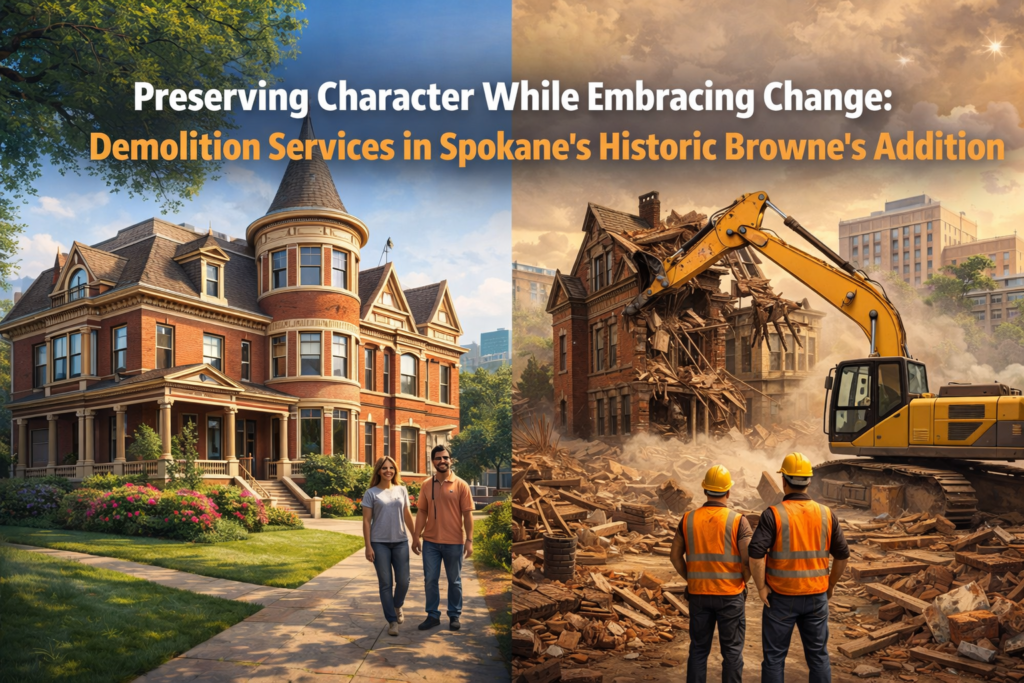
Brownes Addition stands as one of Spokane’s most cherished neighborhoods, a testament to the city’s rich architectural heritage and vibrant community spirit. This historic district, with its tree-lined streets and magnificent Victorian-era homes, represents a unique challenge for urban development and property management. As the neighborhood continues to evolve, balancing preservation with necessary change requires careful planning and expert execution, particularly when it comes to demolition and reconstruction projects.
The Historic Significance of Brownes Addition
Established in the 1880s, Brownes Addition quickly became Spokane’s most prestigious residential area. Named after J.J. Browne, an early Spokane businessman, the neighborhood attracted the city’s elite, who built grand mansions showcasing various architectural styles including Queen Anne, Colonial Revival, Tudor Revival, and Craftsman. Today, many of these historic homes still stand, protected by the neighborhood’s designation as a historic district.
This historic status makes Brownes Addition one of Spokane’s most distinctive neighborhoods, but it also creates unique considerations for property owners and developers. Any changes to structures within the district must consider both the practical needs of modern living and the preservation of the neighborhood’s historic character. This delicate balance becomes particularly important when demolition becomes necessary.
When Demolition Becomes Necessary in Historic Districts
The word “demolition” might seem at odds with historic preservation, but there are legitimate circumstances when removing structures in Brownes Addition becomes necessary and even beneficial to the community. Not every building in a historic district is historically significant, and some structures may pose safety hazards or be beyond practical restoration.
Certain buildings in Brownes Addition, particularly garages, outbuildings, and later additions that don’t contribute to the historic character, may need removal. Some structures suffer from severe deterioration due to fire damage, water infiltration, structural failure, or years of neglect that make restoration economically unfeasible or structurally impossible. In these cases, carefully executed demolition paves the way for appropriate reconstruction or restoration of the property.
Additionally, some properties contain structures that were built during non-historic periods and actually detract from the neighborhood’s character. Removing these non-contributing structures can enhance the historic integrity of the area while allowing property owners to develop their land in ways that better complement the neighborhood’s architectural heritage.
The Unique Challenges of Demolition in Brownes Addition
Working in a historic neighborhood like Brownes Addition requires specialized knowledge and careful attention to detail. A Demolition contractor Brownes Addition must navigate numerous challenges that don’t exist in newer developments or commercial zones.
The proximity of historic homes presents the first major challenge. Many properties in Brownes Addition feature narrow lots with homes built close to property lines. Demolition work must be executed with precision to avoid any impact on neighboring historic structures. Even minor vibrations or debris could potentially damage irreplaceable architectural details on adjacent properties.
The mature tree canopy that gives Brownes Addition much of its charm also complicates demolition logistics. Large equipment must navigate under established trees, and contractors must take care to protect root systems and branches during demolition activities. Many of these trees are as old as the neighborhood itself and contribute significantly to the area’s historic character.
Underground utilities in Brownes Addition often reflect the neighborhood’s age. Original sewer lines, water mains, and later additions of electrical and telecommunications infrastructure create a complex underground network. Before any demolition begins, contractors must carefully map and protect these systems, some of which may still be serving multiple properties.
Street access presents another consideration. Brownes Addition’s streets were designed for a different era, with narrower roadways and limited space for staging equipment and materials. Demolition contractors must carefully plan equipment delivery, debris removal, and site access to minimize disruption to residents and preserve the neighborhood’s infrastructure.
Regulatory Compliance and Historic District Guidelines
Operating within Brownes Addition’s historic district requires compliance with multiple layers of regulation. The Spokane Historic Landmarks Commission oversees changes to properties within the district, and demolition requests undergo careful review to ensure they align with preservation goals.
Property owners must typically demonstrate that demolition is necessary due to structural issues, economic hardship, or because the structure doesn’t contribute to the district’s historic significance. The approval process involves submitting detailed plans, providing documentation of the structure’s condition, and often exploring alternatives before demolition is approved.
This regulatory framework exists to protect the neighborhood’s character, but it also ensures that when demolition does occur, it’s done for valid reasons and executed in ways that minimize impact on surrounding properties. Professional demolition contractors familiar with these requirements can guide property owners through the approval process and ensure all work complies with local historic district guidelines.
Environmental regulations add another layer of compliance. Many older structures in Brownes Addition contain materials that require special handling, including asbestos, lead paint, and old insulation materials. Federal, state, and local environmental regulations govern the removal and disposal of these materials, requiring certified professionals and specific procedures.
Sustainable Demolition Practices
Modern demolition emphasizes sustainability and material recovery, principles that align well with the preservation ethos of Brownes Addition. Rather than simply hauling everything to landfills, contemporary demolition practices focus on salvaging, recycling, and repurposing materials whenever possible.
Historic structures often contain materials that have significant value both economically and culturally. Old-growth lumber, vintage hardware, original windows, decorative elements, and period fixtures can be salvaged and either reused in reconstruction projects or sold to architectural salvage dealers. This approach not only reduces waste but also helps preserve architectural elements that might enhance other restoration projects.
Brick, stone, and concrete from demolished structures can be crushed and recycled for use in new construction projects. Metals including copper plumbing, steel framing, and aluminum can be separated and sent to recycling facilities. Even materials that can’t be directly reused often have recycling potential, reducing the environmental impact of demolition work.
This sustainable approach particularly resonates in a neighborhood like Brownes Addition, where residents often deeply care about environmental stewardship and historic preservation. Demolition contractors who prioritize material recovery and environmental responsibility align with community values while delivering necessary services.
Community Considerations and Neighbor Relations
Demolition work in any residential neighborhood creates temporary disruptions, but in a close-knit community like Brownes Addition, maintaining good neighbor relations becomes especially important. Professional contractors understand that their work affects not just the property owner but the entire surrounding community.
Effective communication forms the foundation of successful demolition projects in residential areas. Notifying neighbors about project timelines, expected noise levels, and any potential disruptions helps manage expectations and demonstrates respect for the community. Many contractors provide contact information so neighbors can voice concerns or ask questions throughout the project.
Noise management becomes crucial in densely populated historic neighborhoods. While demolition inevitably creates some noise, professional contractors schedule the loudest activities during reasonable hours, use equipment with noise-reduction features when possible, and work efficiently to minimize the duration of disruptive activities.
Dust control protects both nearby properties and resident health. Water suppression systems, barriers, and careful material handling reduce airborne dust particles. This consideration becomes especially important when working near historic homes where dust infiltration could damage interiors or when residents with respiratory sensitivities live nearby.
Traffic management ensures that demolition activities don’t unduly disrupt neighborhood life. Contractors coordinate equipment and material deliveries, arrange appropriate parking for crews, and maintain clear pedestrian pathways. In Brownes Addition, where many residents walk or bike through the neighborhood, maintaining safe passage routes is essential.
Integration with Neighborhood Revitalization
When executed thoughtfully, demolition projects in Brownes Addition can contribute to neighborhood revitalization rather than detract from it. Removing structures that have become safety hazards or eyesores improves the overall appeal of the area and can spark additional investment in surrounding properties.
Property owners who responsibly address deteriorating structures demonstrate commitment to the neighborhood and often inspire others to invest in property improvements. This ripple effect can enhance property values throughout the area and strengthen community pride.
The land cleared through demolition often becomes the site of new construction that complements the historic character of Brownes Addition. Whether replacing a demolished structure with a period-appropriate new build or creating open space that enhances the property, thoughtful redevelopment can add value while respecting neighborhood aesthetics.
The Future of Brownes Addition
As Brownes Addition continues to mature, the need for professional demolition services will persist. Not every structure can or should be preserved, and making wise decisions about which buildings to maintain and which to remove requires expertise, judgment, and respect for the neighborhood’s unique character.
The coming years will likely see continued interest in Brownes Addition as people seek neighborhoods with character, walkability, and community connection. Property owners will continue to balance the challenges of maintaining aging structures with the opportunities for renovation and appropriate new development.
Professional demolition services will remain an essential part of this evolution, providing the expertise needed to safely and responsibly remove structures when necessary while protecting the historic homes and community character that make Brownes Addition special.
Conclusion
Demolition work in Brownes Addition requires more than technical skill and heavy equipment. It demands an understanding of historic preservation principles, sensitivity to community values, knowledge of regulatory requirements, and commitment to protecting the neighborhood’s irreplaceable character.
Whether removing a deteriorated garage, clearing a fire-damaged structure, or taking down a non-contributing building, professional demolition contractors serve as partners in the ongoing stewardship of this historic neighborhood. Their work, though sometimes necessary, is always undertaken with the goal of preserving and enhancing what makes Brownes Addition one of Spokane’s most treasured communities.
As the neighborhood continues its journey through the twenty-first century, the careful balance between preservation and change will remain essential. Professional demolition services, executed with expertise and respect for the community, will continue to play a vital role in maintaining Brownes Addition’s unique character for generations to come.